The practical guide for business owners · $12.99

Do you know the right cybersecurity questions to ask?

You do not have to become an IT expert to protect your business. This practical digital guide helps you ask seven important questions, understand the answers, and turn uncertainty into a plan.

Website bonus: Buy directly here and receive free access to our online community, launching October 15, 2026.

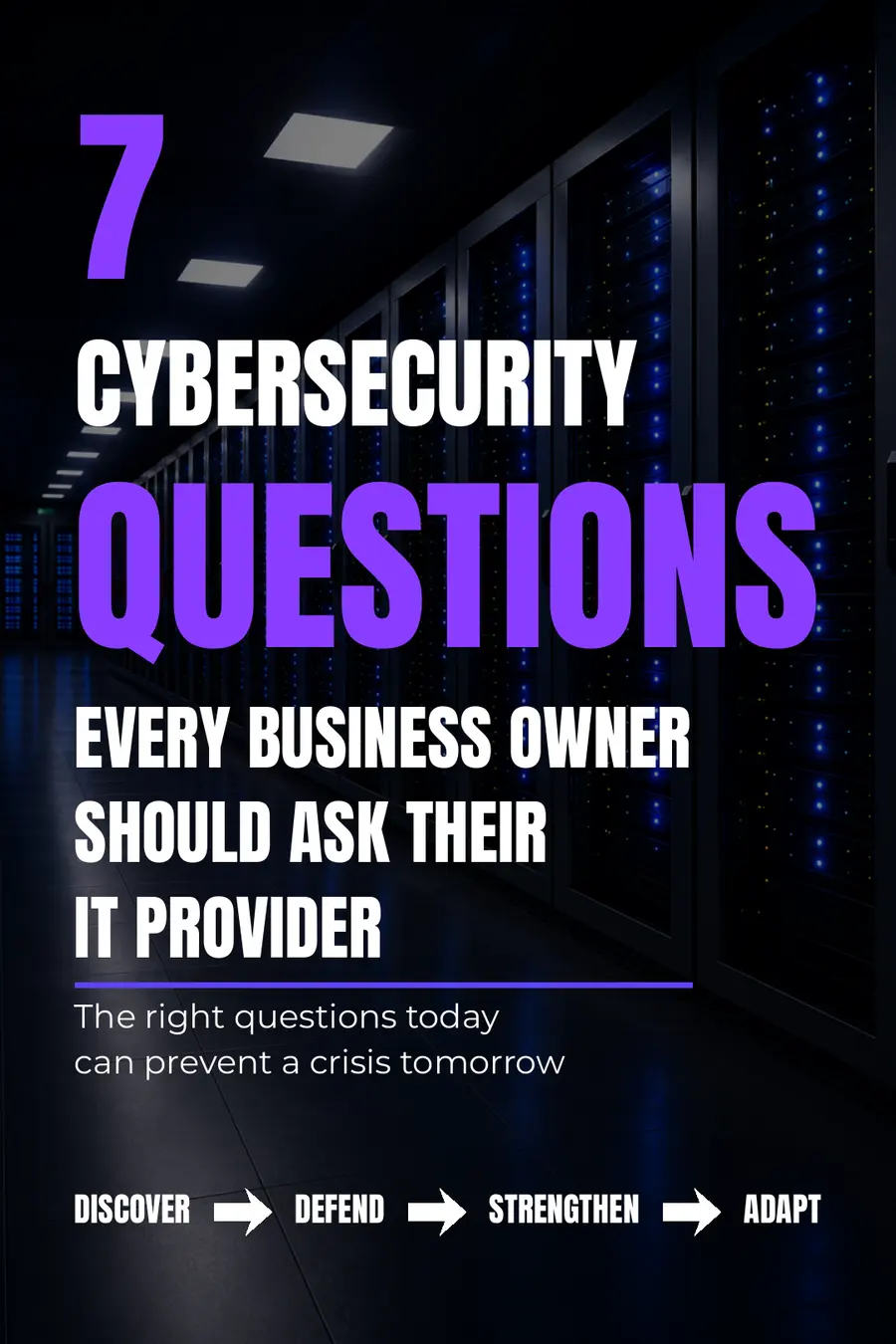
Cover of 7 Cybersecurity Questions Every Business Owner Should Ask Their IT Provider

By Thomas M. McClendon

Discover  ·  Defend  ·  Strengthen  ·  Adapt

A practical starting point

You already wear enough hats.

Running a business means juggling people, customers, finances, and a growing list of things you hope to get to someday. Cybersecurity can become another sticky note on the wall. This book gives you a practical starting point for the conversation before uncertainty becomes a problem.

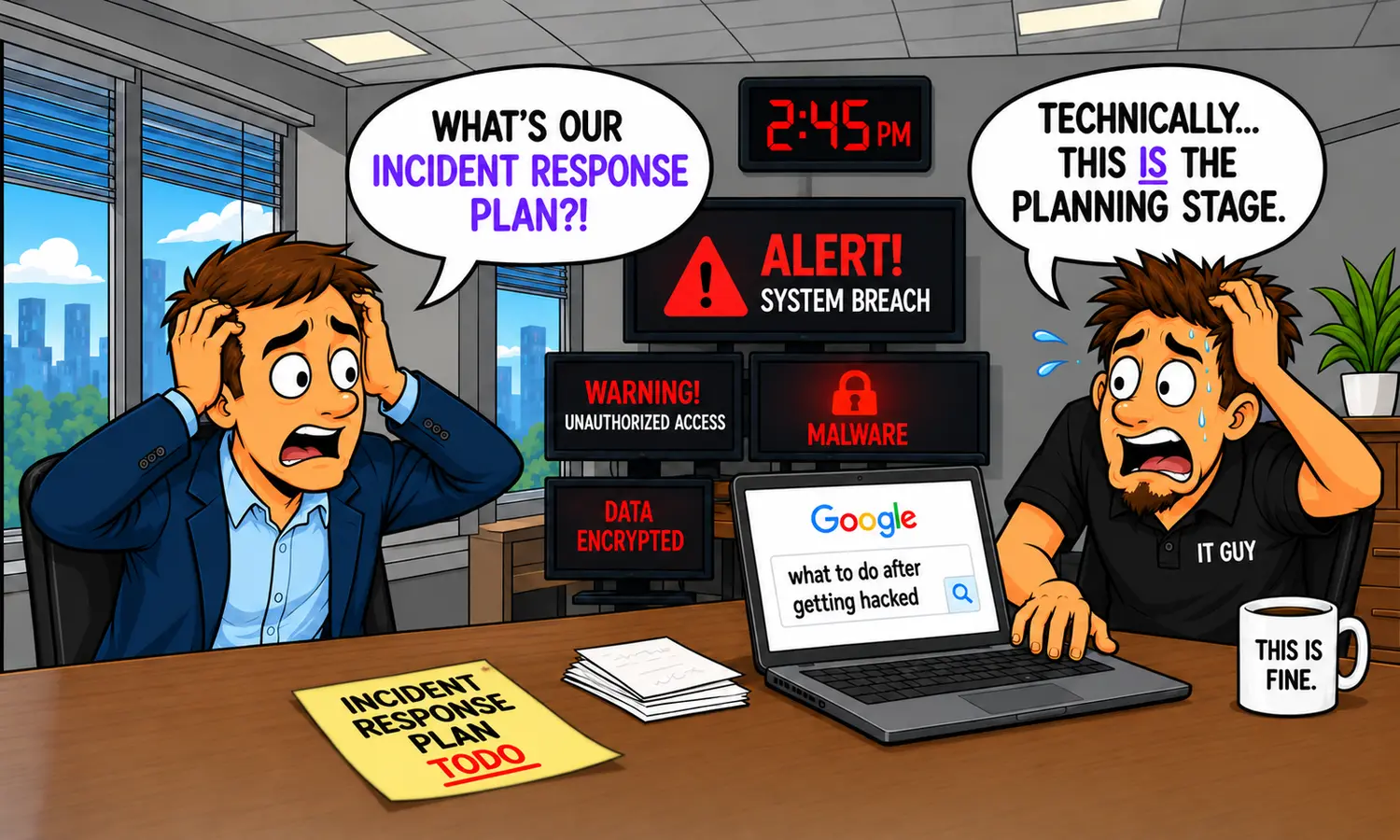
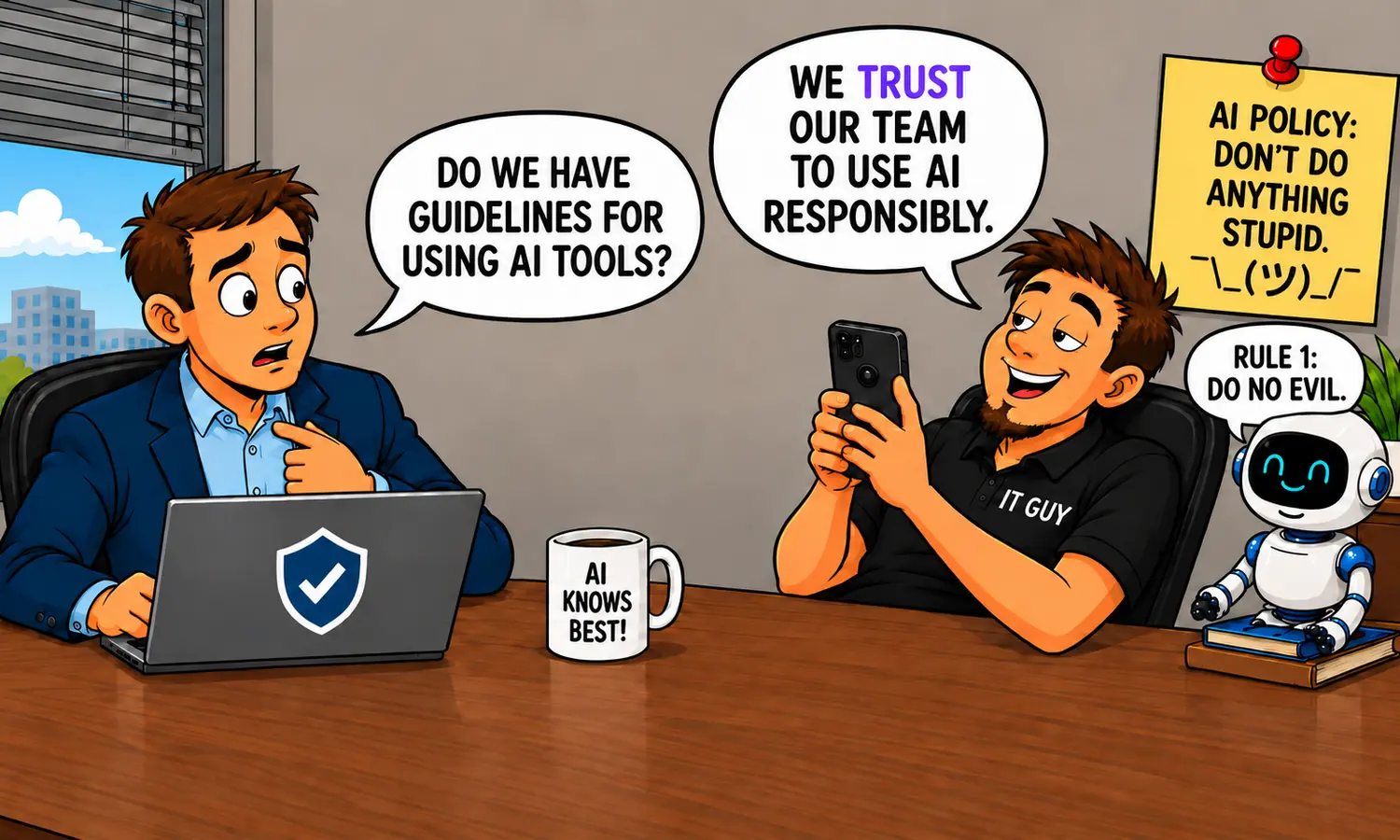
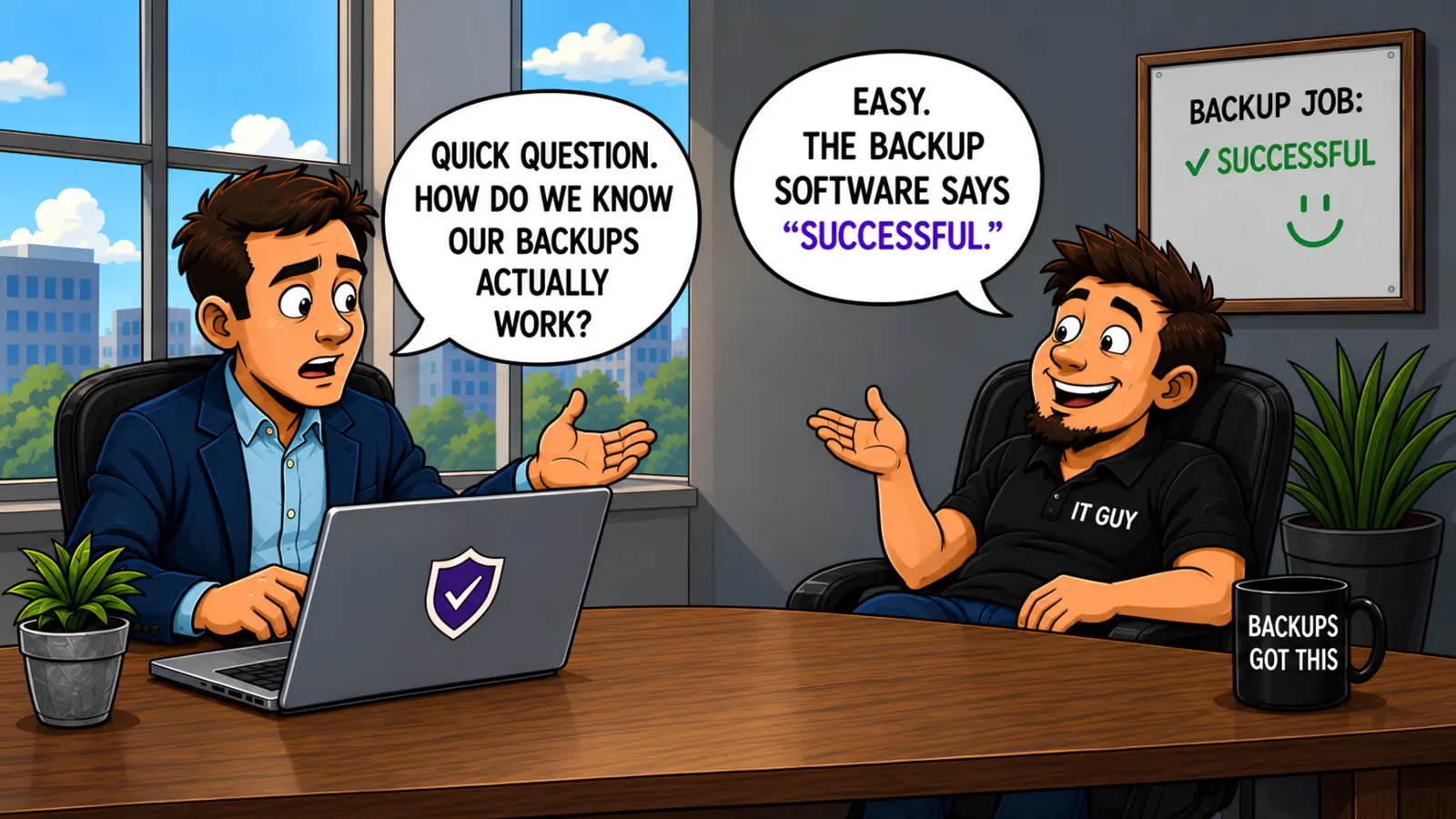
Cinematic panel 1 showing a business owner asking his IT provider about backup readiness
Panel 1 of 4
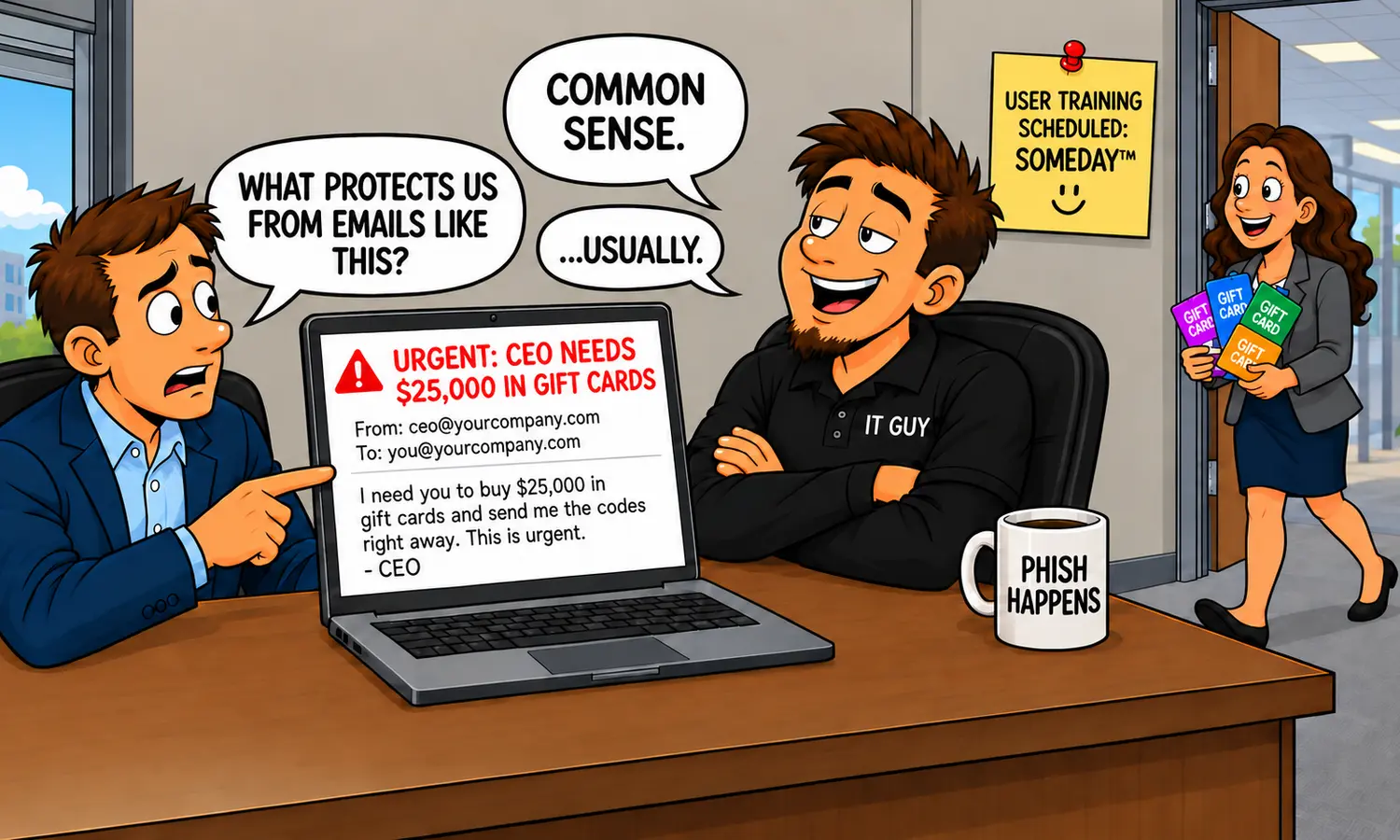
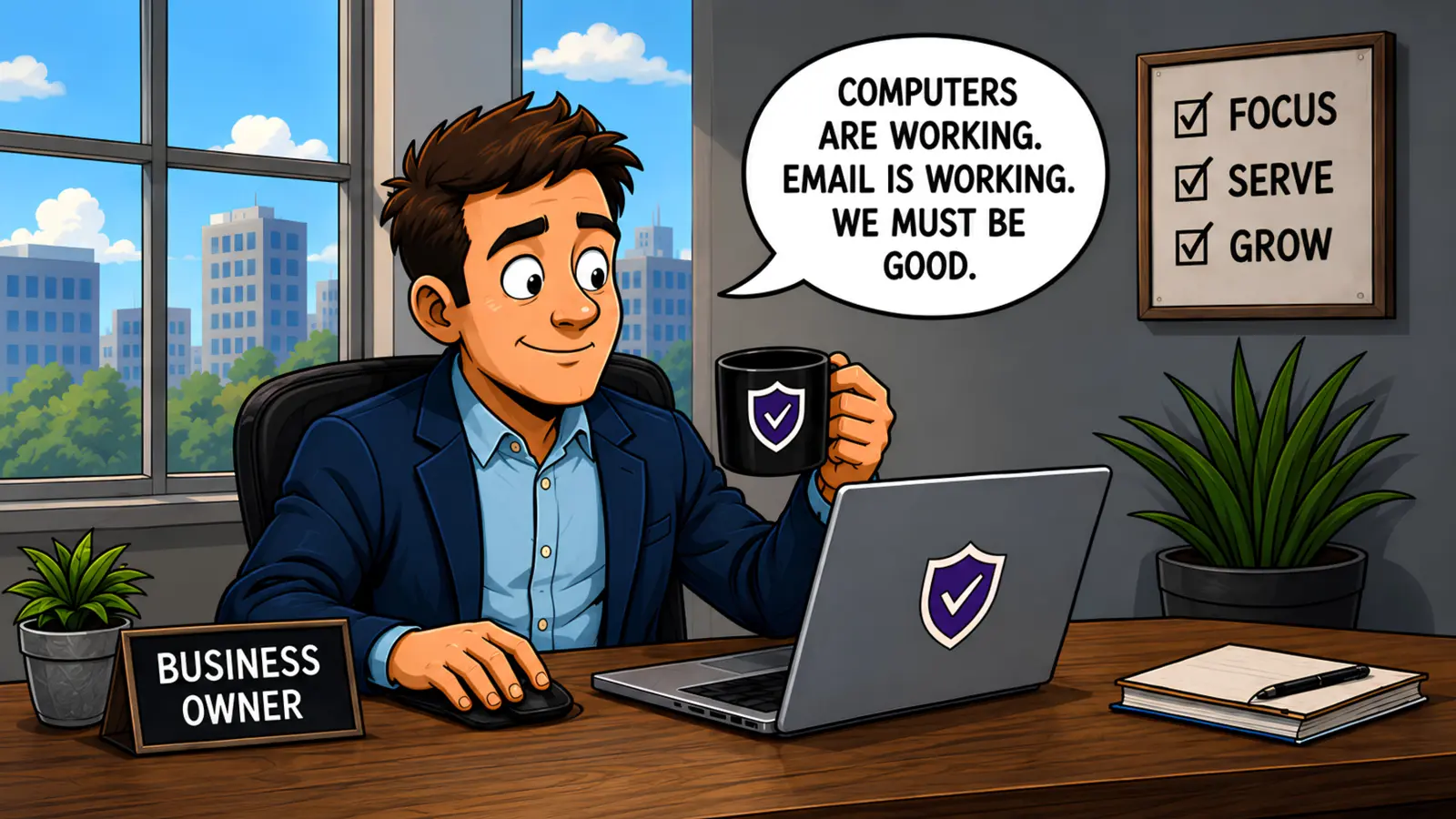
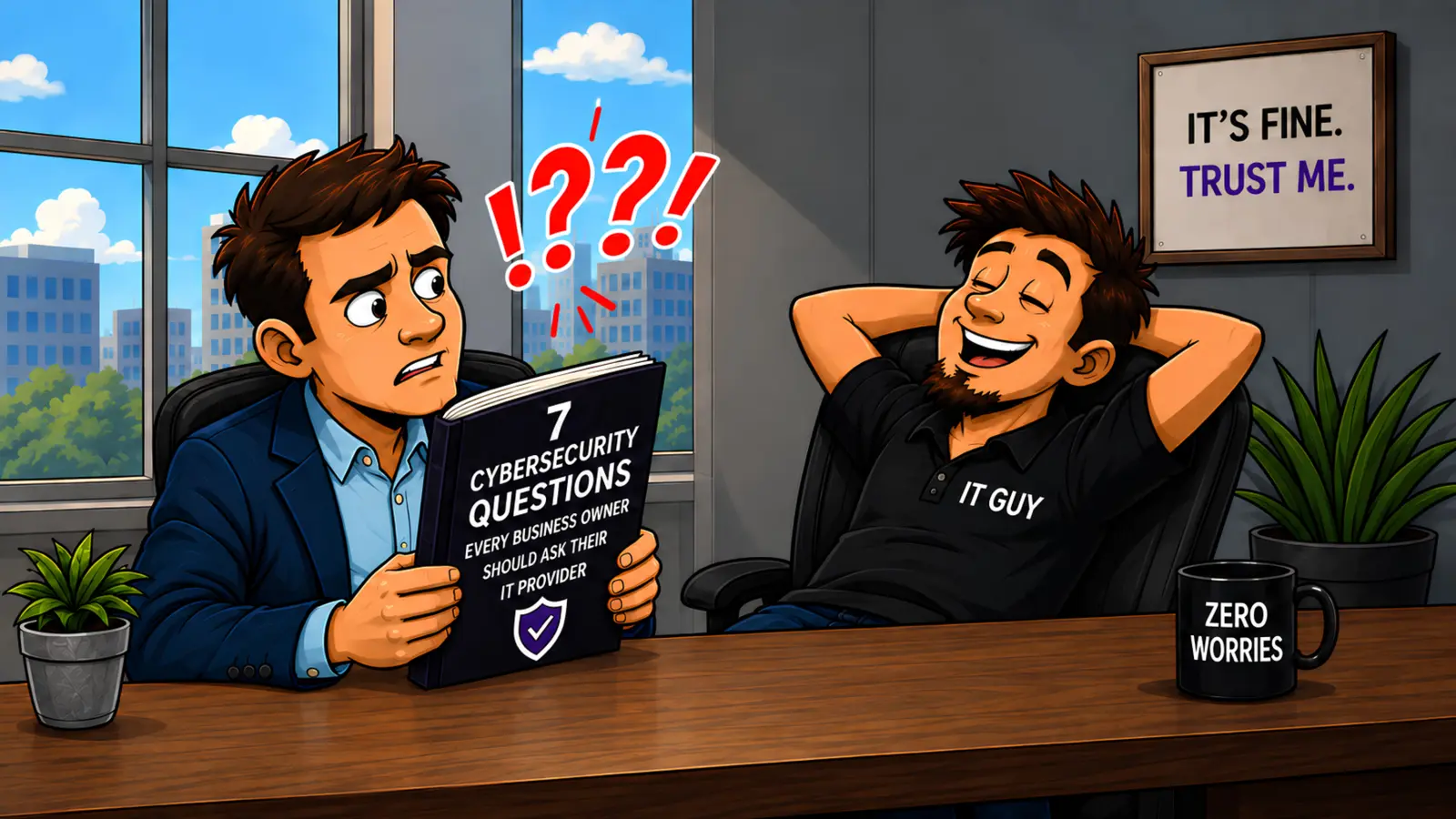
Cinematic panel 2 showing a business owner asking his IT provider about backup readiness
Panel 2 of 4
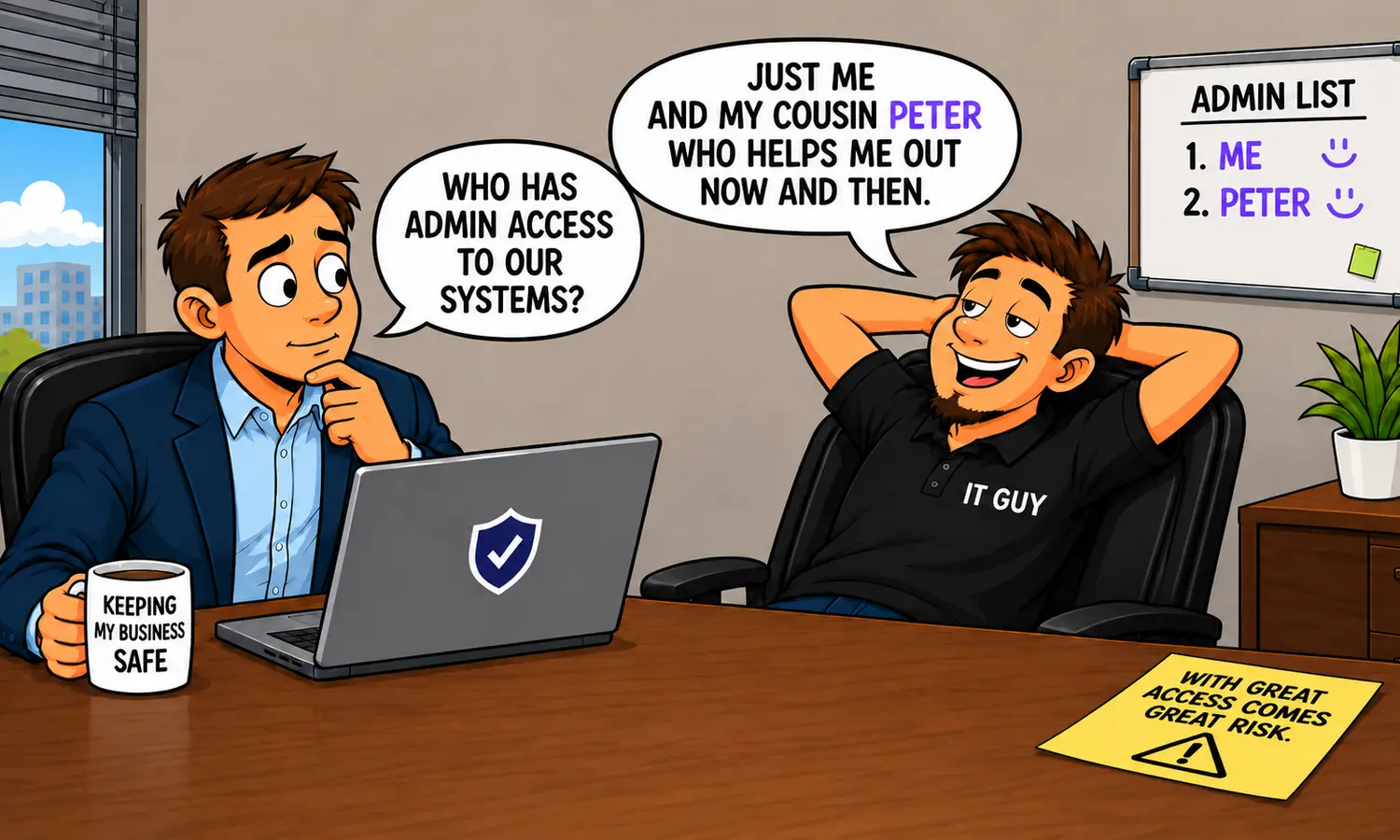
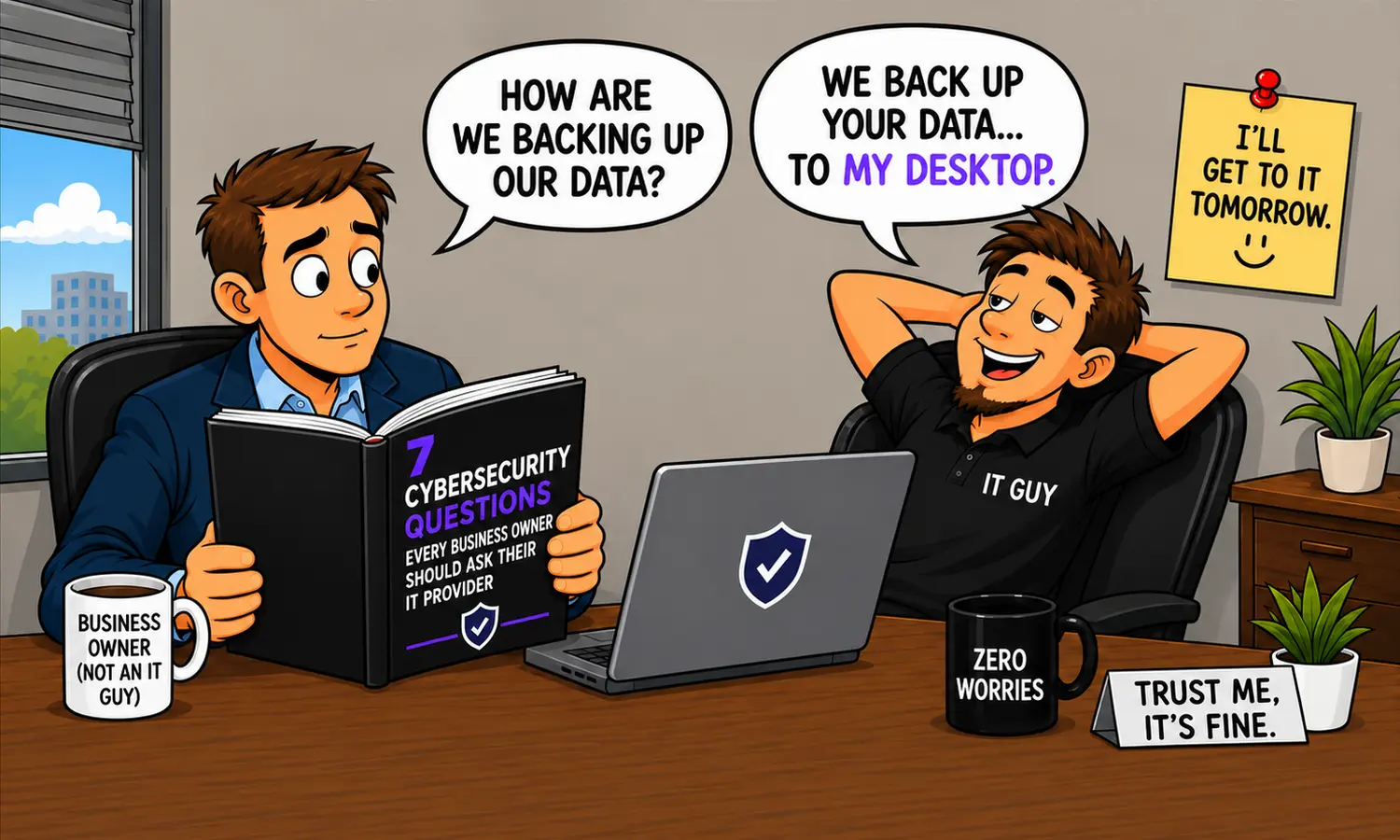
Cinematic panel 3 showing a business owner asking his IT provider about backup readiness
Panel 3 of 4
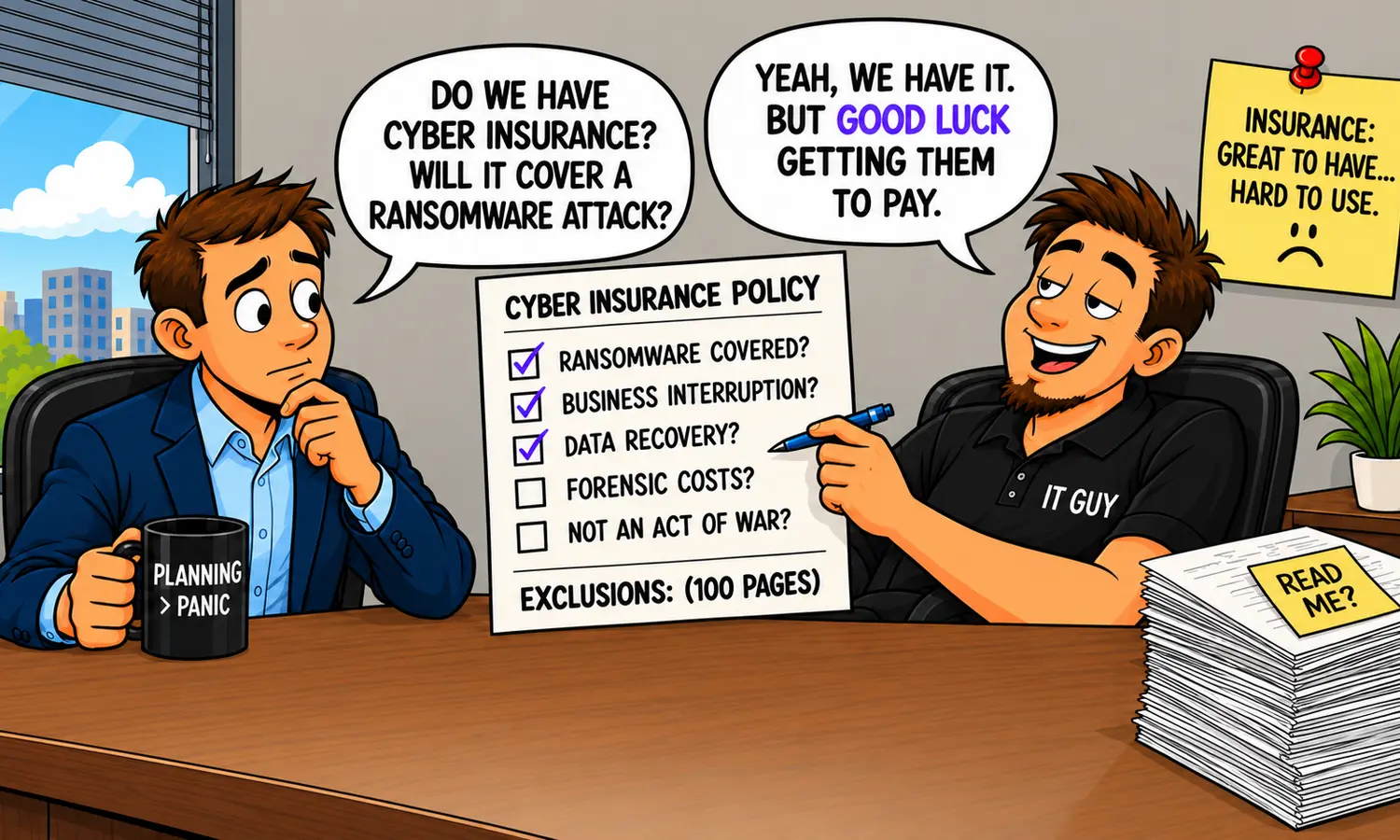
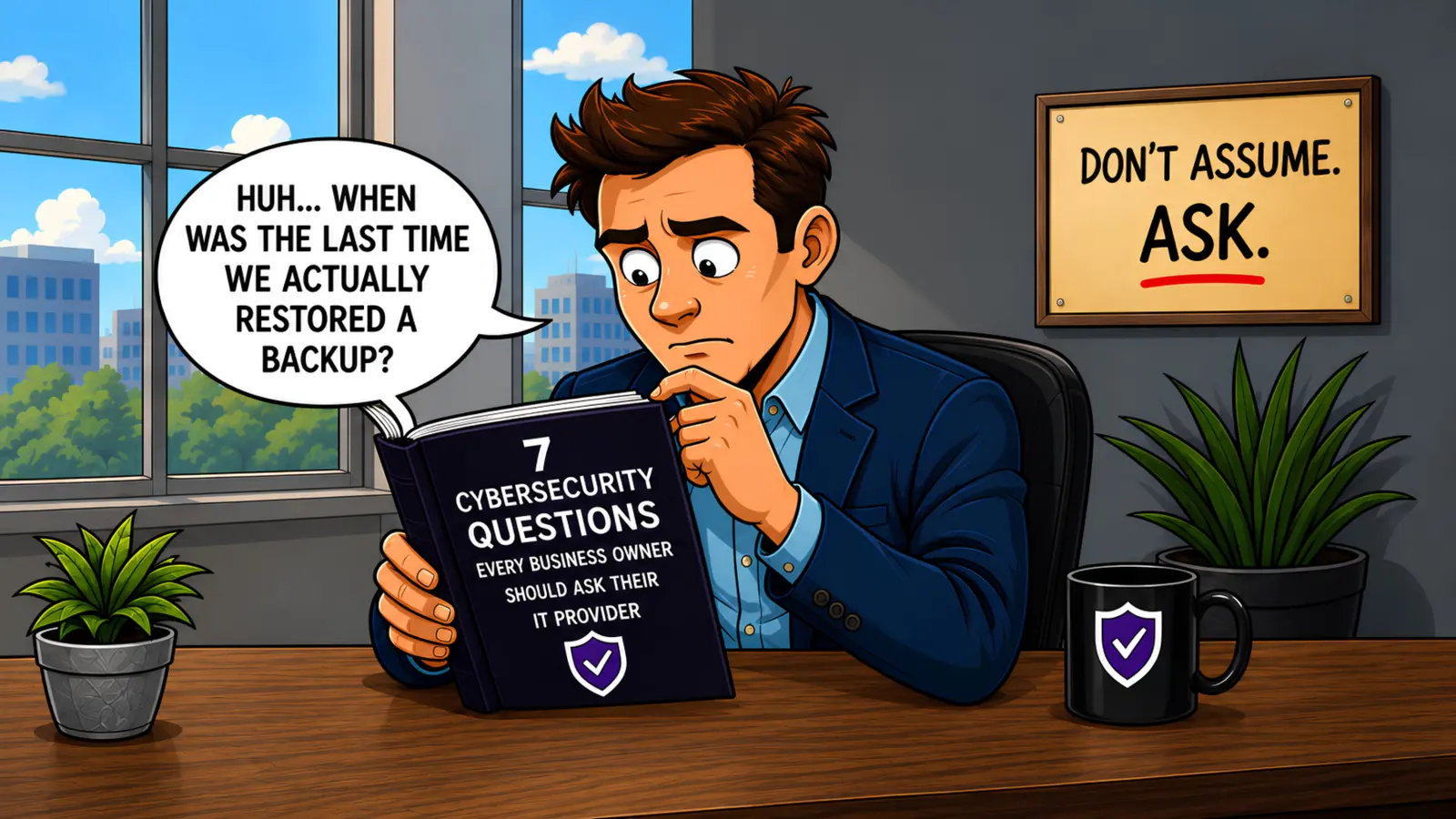
Cinematic panel 4 showing a business owner asking his IT provider about backup readiness
Panel 4 of 4

Inside the digital book

Seven questions. A clearer plan.

Explore backups and recovery, threat detection, incident response, email security, administrative access, cyber insurance, and AI and data protection. The 82-page PDF also includes a planning checklist, clarity-meeting guidance, note pages, and free resources.

Illustration for question 1: How do we know our backups actually work?

Question 1

How do we know our backups actually work?

A backup is only useful if it can be restored. Ask how often restores are tested, who reviews the results, and whether a clean copy is protected away from the systems it backs up.

Listen for A recent test date, documented results, recovery targets, and a clear owner.
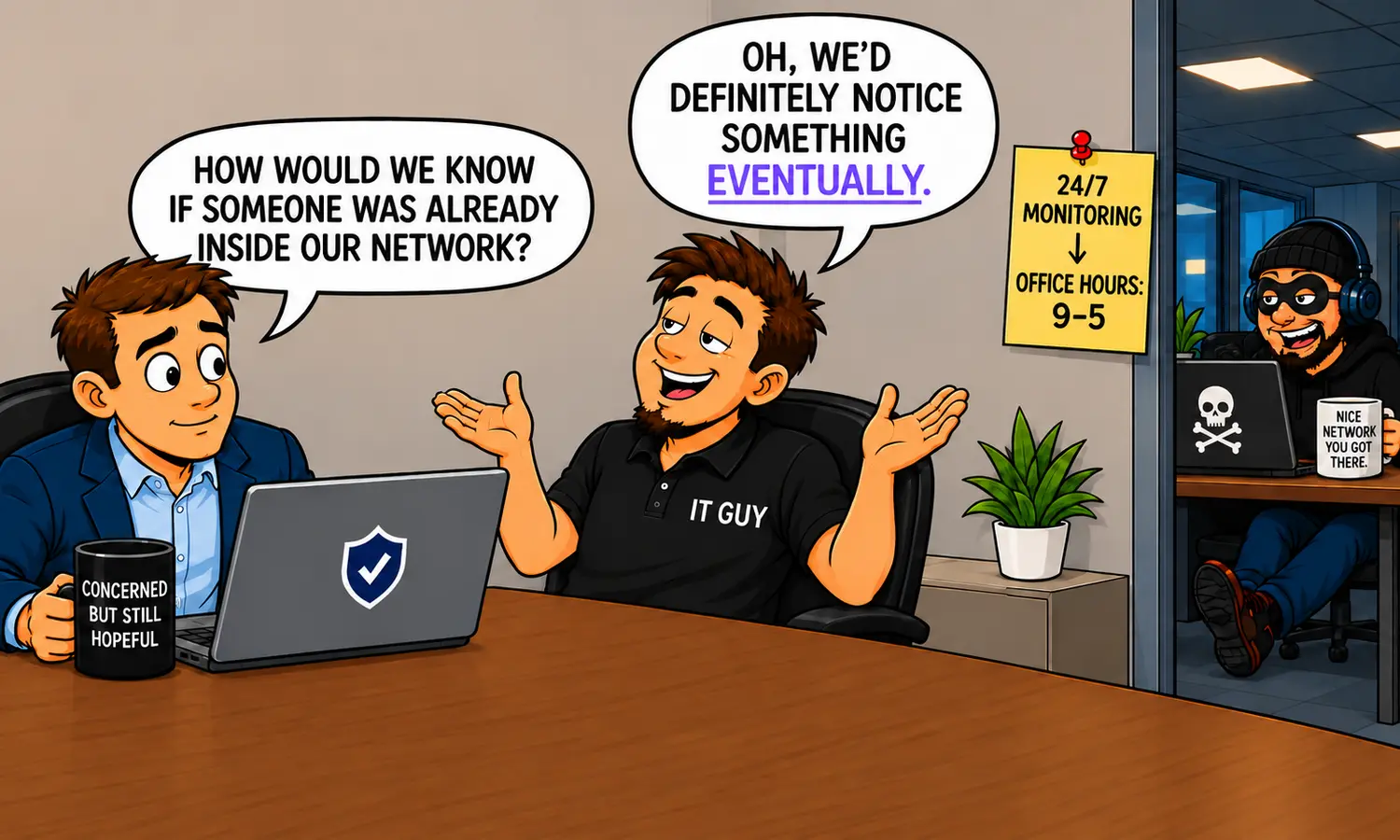
Illustration for question 2: How would we know if someone was already inside our network?

Question 2

How would we know if someone was already inside our network?

Prevention matters, but detection determines how quickly suspicious activity becomes a contained event instead of a prolonged business crisis.

Listen for Continuous monitoring, meaningful alerts, named responders, and after-hours coverage.
Illustration for question 3: What is our incident response plan?

Question 3

What is our incident response plan?

When pressure is high, people should not be inventing the plan. Roles, communication paths, evidence handling, and recovery priorities should already be understood.

Listen for A written plan, assigned roles, current contacts, and proof that the plan has been exercised.
Illustration for question 4: What protects us from email scams and impersonation?

Question 4

What protects us from email scams and impersonation?

Email is where technical controls and human judgment meet. Protection should cover malicious messages, account takeover, domain impersonation, and payment fraud.

Listen for Layered filtering, MFA, SPF/DKIM/DMARC, training, and a simple reporting process.
Illustration for question 5: Who has administrative access to our systems?

Question 5

Who has administrative access to our systems?

Powerful access should be rare, deliberate, and reviewable. Shared accounts and forgotten privileges create risk that is difficult to see until something goes wrong.

Listen for A current access list, individual accounts, MFA, approval controls, and regular review.
Illustration for question 6: Does our cyber insurance actually match our risk?

Question 6

Does our cyber insurance actually match our risk?

A policy is not a substitute for security, and assumptions can become expensive exclusions. Your controls, application answers, coverage, and response plan should agree.

Listen for Clear coverage limits, known exclusions, control requirements, and incident notification steps.
Illustration for question 7: What are our rules for AI and data protection?

Question 7

What are our rules for AI and data protection?

AI can create real value, but unapproved tools can expose confidential information. People need practical boundaries that keep innovation useful and accountable.

Listen for An approved-tool list, data rules, human review, training, and a process for exceptions.

A simple way forward

From uncertainty to a useful conversation.

  1. 01
    Get the book.

    Download the complete 82-page PDF after your purchase is confirmed.

  2. 02
    Ask the seven questions.

    Document what you learn and identify the answers that still need evidence.

  3. 03
    Create a practical plan.

    Prioritize the next steps with your IT provider or another qualified professional.

Launching
October 15
2026

Included with direct purchase

Your next step does not have to be a solo effort.

Purchase the PDF directly from this website and receive free access to our online community when it launches October 15, 2026. We will email eligible buyers their access instructions when the community opens.

One important rule

If you do not understand the answer, keep asking questions.

If the answer is not a clear, evidence-backed “yes,” treat it as a “no” until it can be verified.

Thomas M. McClendon, founder and president of Citadel Networks

About the author

Thomas M. McClendon

Thomas is the founder and president of Citadel Networks, a cybersecurity, compliance, and managed IT services company serving small and midsize businesses. Known as the Friendly Cyber Avenger, he turns cyber risk into practical action without unnecessary complexity or fear.

A Marine Corps veteran with more than 25 years in technology and cybersecurity, Thomas believes cybersecurity is a business responsibility, not simply an IT problem.

Before you purchase

Common questions.

What format will I receive?

A downloadable digital PDF. No printed book ships with this purchase.

How do I receive the book?

After successful payment, you will receive a protected download link on the confirmation page and by email.

Do I need an account?

No account is required to purchase or download the book. Community access may require account activation.

When does community access begin?

The community launches October 15, 2026. Eligible direct buyers will receive access instructions by email when it opens.

Who qualifies for the community bonus?

Customers who purchase the PDF directly from this website.

What if my link expires or the email does not arrive?

Use the secure delivery recovery page or contact [email protected]. Your purchase remains recorded.

The book + a website-exclusive bonus

Own the guide. Join the conversation.

Purchase the complete 82-page digital PDF for $12.99. Your direct website purchase also includes free access to our online community when it launches October 15, 2026.